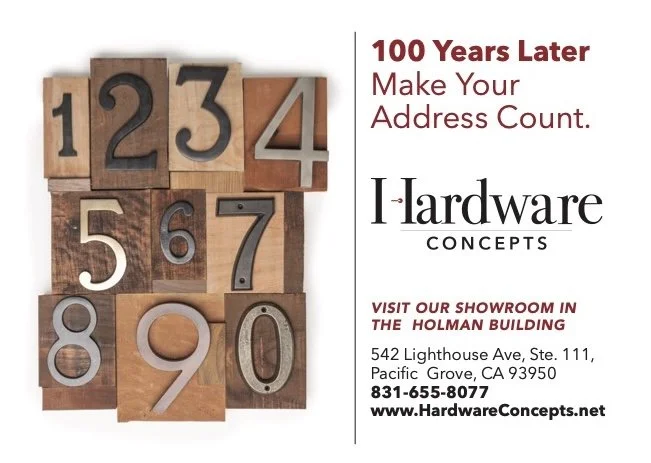
There is something funny about making an advertisement for house numbers in Carmel-by-the-Sea. For a town that has spent more than a century happily doing things its own way, the idea of putting a number on your front door can feel almost revolutionary. Carmel has always had a slightly different relationship with addresses, streets, houses and the rest of the orderly nonsense that comes with modern civilization. Now, roughly a hundred years later, addresses are finally becoming part of the landscape.
The timing was also interesting because we are currently living through the most AI-saturated moment advertising has ever seen. You can type a sentence into a computer and, a few seconds later, have a perfectly lit house, a perfectly dressed model, a perfectly landscaped yard and a sunset that has apparently been approved by the International Association of Dramatic Sunsets. It is impressive. It is also starting to look a lot like everything else.
So for this one, I wanted to do the opposite.
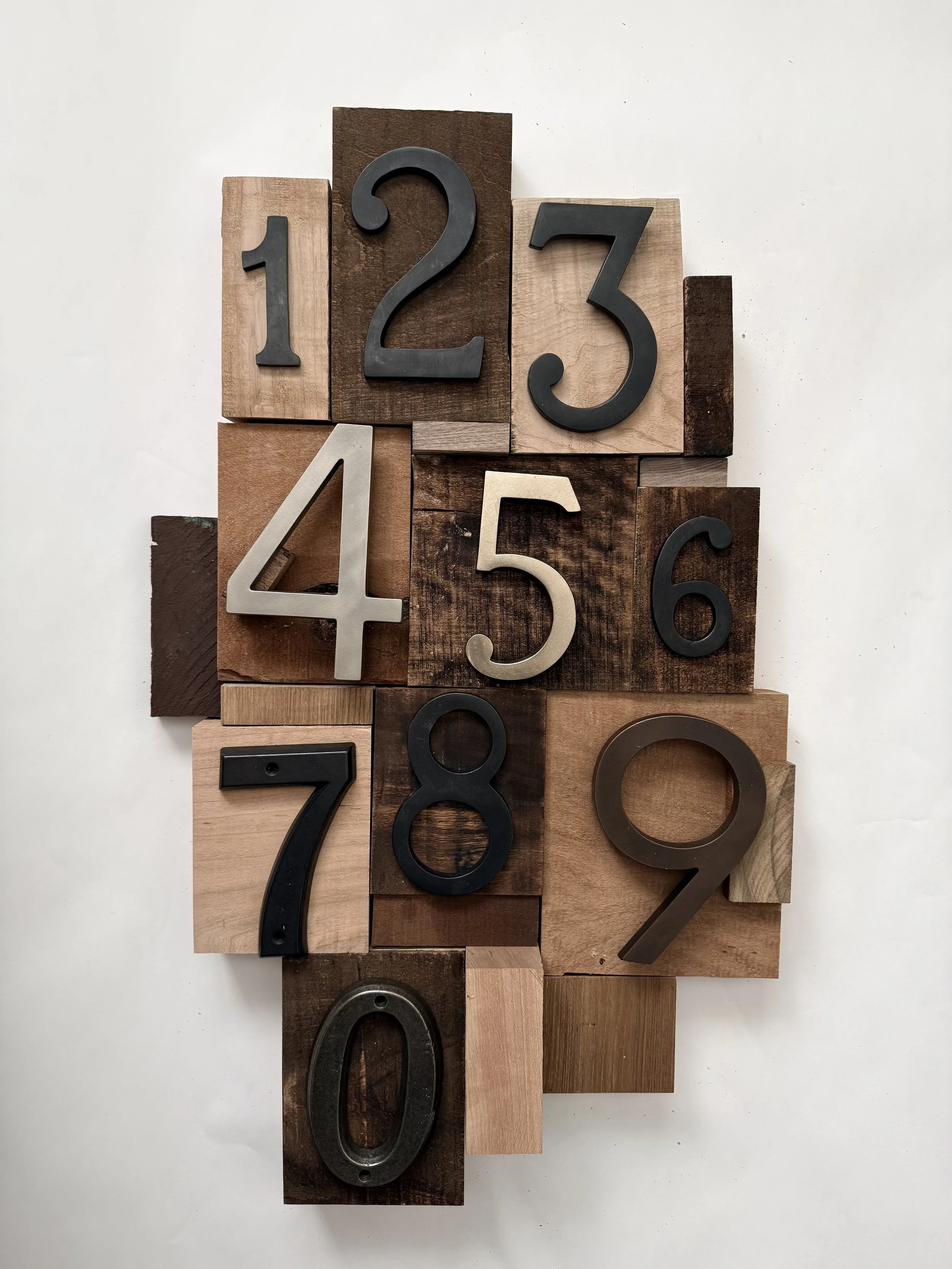
The raw photo
I wanted to actually make the photograph.
There is still something incredibly satisfying about setting up a camera, finding the right light, moving things around by an inch, looking through the lens and realizing that the composition isn't working, then moving everything around again. It is slower. It is less convenient. It occasionally involves standing around wondering why the photograph that looked so good in your head suddenly looks terrible on the back of the camera.
But that is also the good part.
When you make a photograph instead of generating one, you are responding to something that actually exists. The light is real, materials, shadows are real. The little imperfections are real. You have to make decisions rather than simply describe the decisions you want a machine to make for you.
For a creative person, that process is still a lot of fun.
And in this particular case, it felt especially appropriate. Hardware Concepts makes products that are meant to live in the real world. Their house numbers aren't pixels or renderings or AI-generated representations of architectural hardware. They are physical objects that get mounted to an actual house and become part of how that house identifies itself.
That is what I liked about the concept. An address is a tiny piece of information, but it becomes part of the character of a building. The number on the front of your house is functional, but it doesn't have to be boring. Like a door handle, a light fixture or a piece of good hardware, it can be one of those small details that tells you somebody actually cared about the place.
Living in Carmel makes that idea even more interesting. This is a town that has always placed an unusual amount of value on character, individuality and the details of the built environment. So the idea that we are finally embracing addresses, after more than a hundred years of doing things differently, seemed like a pretty good excuse to have some fun with an advertisement.
It also gave me a chance to remember why I got into photography and design in the first place. Before every problem had an AI solution, you had to figure things out. You had to make something. You had to screw it up occasionally. You had to look at it again the next day and decide whether it was actually any good.
I am certainly not anti-AI. Far from it. It is an incredible tool, and like every other tool, what matters is what you do with it. But there is a big difference between making something and describing something you would like to have made.
Sometimes the best creative solution is still to pick up a camera and go make the damn photograph.
Especially when the subject is something as simple as a house number.
After a hundred years without addresses, I figured Carmel could handle one more old-fashioned idea: making an advertisement the hard way.